Learn How to Draw Whatever You See or Imagine

DrawingAcademy

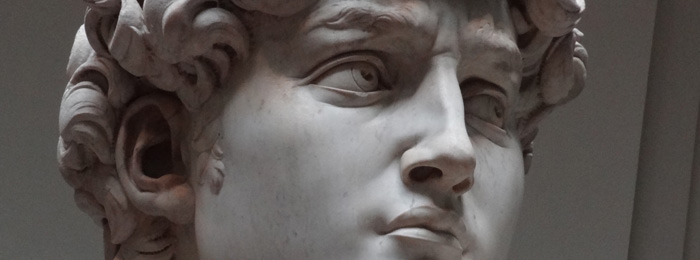
david-by-michelangelo

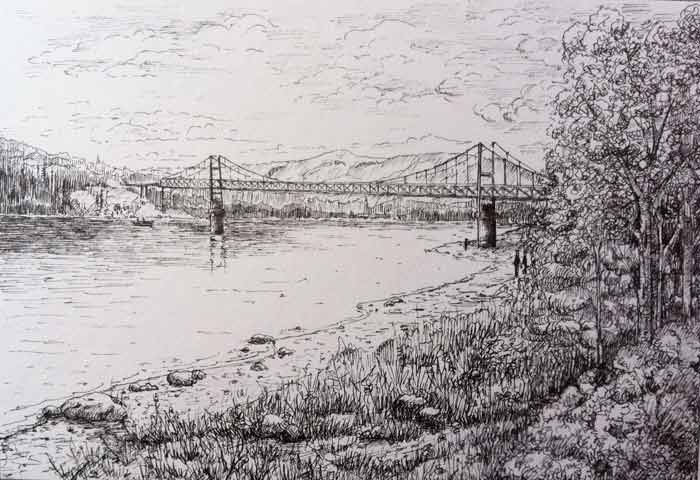
Use of plumb line in drawing

Question from Gilberto

In a previous art school I attended, I was told about the use of plumb lines to help in my drawings. I’ve never got to use one; in fact I’ve never seen a drawing plumb line before, thus I do not know the technique for such instrument in drawing.

What is a plumb line and how could I use it properly for the drawing, say, of a live model?

Read More
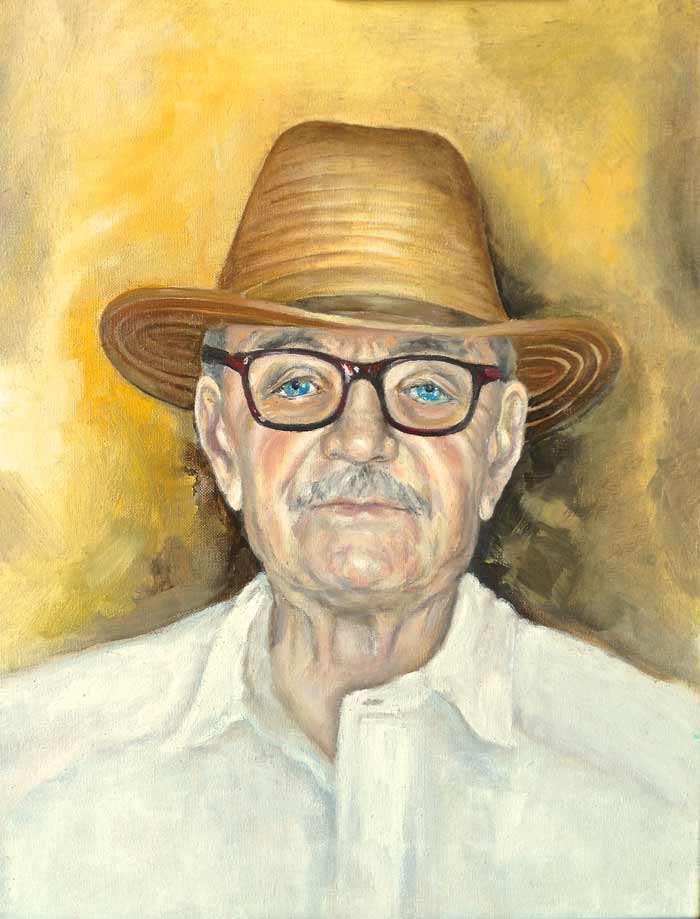
My father's portrait

My father’s portrait

Painting by Aranka Kocsis Tothne, Drawing Academy student

In September 2009 I started studying Art management. After my first painting lesson I realized that I didn’t want to sell other people’s paintings but to draw and paint.

In 2010, I took some drawing lessons and started painting portraits.

Now, I would like to share my father’s portrait, which I painted after becoming a member of the Web Art Academy

Read More
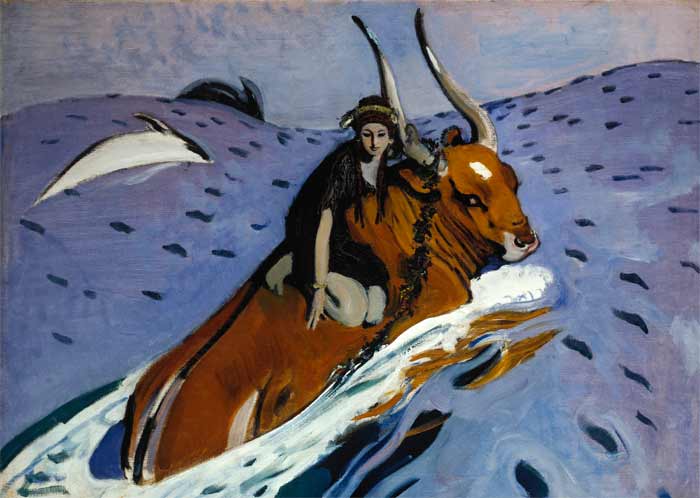
Valentin Serov

Valentin Serov

Article by Vladimir London, Drawing Academy tutor

Valentin Serov was born 19 January 1865, the only son to a family active in the St. Petersburg arts community. His father was a composer and famous music critic, his mother over 25 years his father’s junior. He grew up surrounded by the notable Russian artists of the day, his parents hosting sculptors like Mark Antokolsky and painters like Ilya Repin. In this environment, Serov’s talents were early recognized and cultivated.

When Serov was six, his father passed away. Although his mother devoted herself primarily to her social obligations to the detriment of her son, once she saw his artistic gifts they moved to Paris. There, the young Serov had the opportunity to study more deliberately under Repin, who had taken residence in Paris. Although Serov began to formally develop his talents,…

Read More
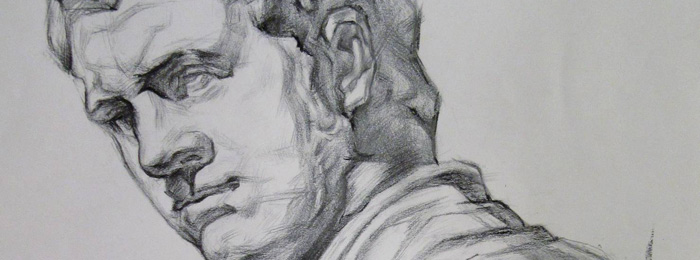
Study-of-Roman-Bust---Caracalla

Roman Bust Study – Caracalla

Artwork by Prudence Leung

I still remember sun ray shining on the beautiful blond hair of my first nursery school teacher as she handed me my first ever box of crayons. In my little 3 years old’s mind, the box of crayons was the most amazing thing I’d ever seen. It was a beautiful and magical moment to me.

I have left my passion behind for a very long time and a social paint night about a month ago brought me back to creating art again, and I have been obsessed with improving my skills ever since.

Drawing Academy has an impressive dedication to passing on the old master’s draftsmanship. Artists do not have to draw realistically, and drawing is not the only way to express ourselves artistically. However, being able to draw realistically is a huge asset, and an important tool to depict the imaginary world for others to see…

Read More
A Drawing Academy Diploma Question

A Drawing Academy Diploma Question

Question from Dean Pridmore

I am new to your fantastic course and was a little confused on one aspect.

I have all of the lessons open to me to complete. However you say the course period is to be completed in three months to be eligible to receive the Diploma.

So I was wondering how I go about the lessons, and how you evaluate my work. Do I complete all lessons within three months and send the work to you via email, along with an example of my drawing ability before I took the course?

Thank you for any help you can give me…

Read More
How to capture a likeness in a portrait

How to capture a likeness in a portrait

Question from Noah, Drawing Academy student

Good Day Art Tutor,

My name is Noah, I’m a fashion design student. I’ve been drawing for quite a while, and I particularly love illustrating human subjects. I’m self-taught and would like to learn more about drawing and also to correct my amateur mistakes.

I have a problem creating the foundation of my heads (I do not have an art museum that’s conveniently close to me so I use reference photos). My problem is that I can’t get the proportions right to capture the likeness of the subject I am working on, so I tend to focus on a particular part of the face, which makes the final product look like a caricature instead of a real drawing.

My questions are:

1. How do I adapt proportions to fit the subject that I am drawing?

2. How do I get the correct nose, eyebrow, and mouth levels?

I would like to thank you in advance for teaching and preserving the Masters’ way of drawing, and I look forward to learning more…

Read More
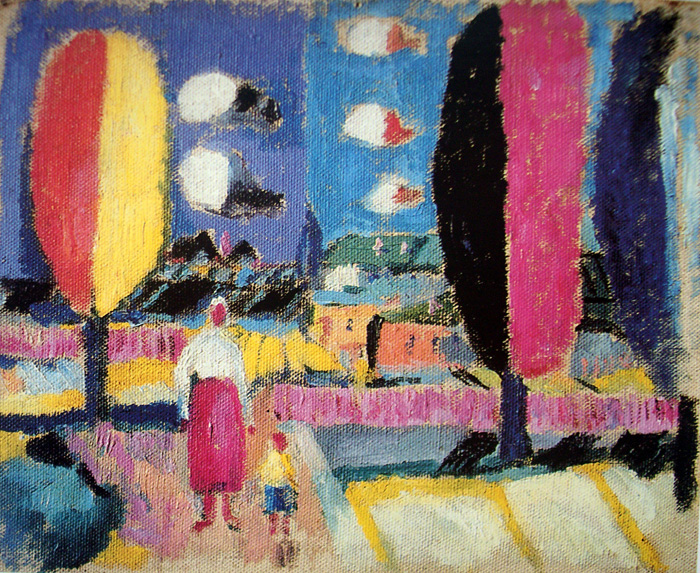
Kazimir Malevich

The phenomenon of Malevich

Article by Vladimir London

Born 11 February 1878 to a Polish family in Kiev, Kazimir Malevich is best known as one of the standard bearers of non-figurative, avant-garde art. The eldest of fourteen children (nine of whom survived to adulthood), he moved around often because of his father’s work on sugar beet plantations.

Despite his distance from formal centers of learning, the surrounding beauty and color of the Russian landscapes left an indelible impression upon him. Seeing a roof-painter and being mesmerized by way in which color transformed his grand palette, Malevich fell in love with painting. His parents humored his interest, buying him a medical brush at a pharmacy, all the while assuming he would follow in his father’s footsteps and assume a more fitting occupation. He studied at an agricultural school (his only formal education), and for the…

Read More
Life Drawing Academy
Old Masters Academy
Watercolor Academy
Anatomy Master Class