Article by Ayyub
The Rococo art movement was prolific throughout 18th century Europe for its attractive lightheartedness and softness. When it comes to Rococo, Fragonard’s “The Swing” comes to mind. Why shouldn’t it? It has become the epitome of Rococo for its style, color, and naughtiness, but that is what it was criticized for. The Enlightenment movement saw Rococo art as frivolous and immoral as they called for civic and respectable artworks built on reason and common sense. The French Rococo and the subsequent Neoclassicism is fascinating because it has represented the great schism between the French public and French aristocracy into what would become the French Revolution, and it all began with the death of the monarchy.
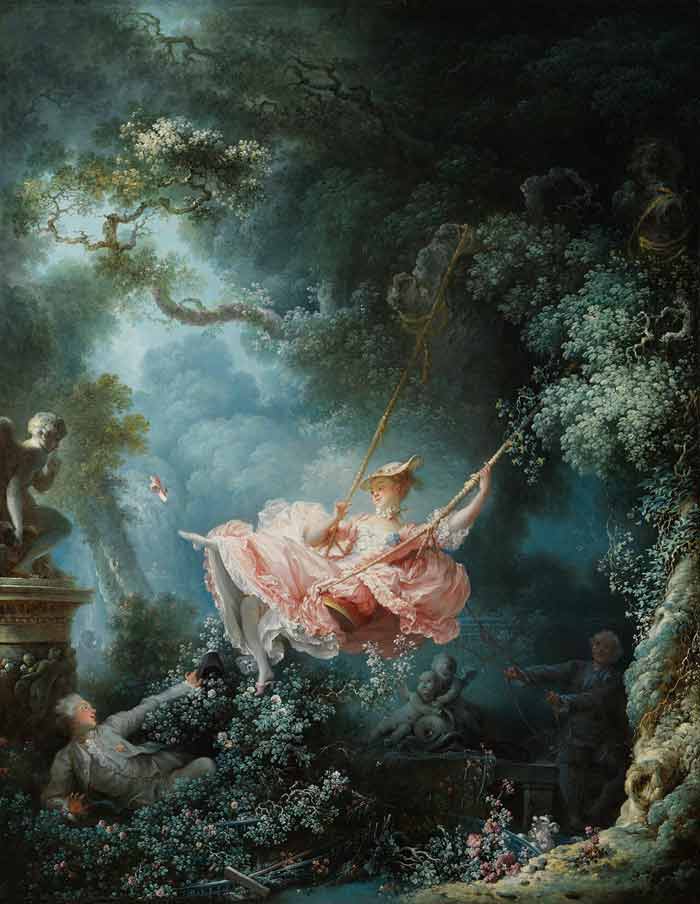
The Swing by Jean-Honoré Fragonard
Before King Louis XIV’s death, his power and control was absolute, and he proudly displayed this absolutism with the Baroque style that adorned his Palace of Versailles. After his death in 1715, the palace was emptied and the French aristocracy resided in their own estates. That was where the Rococo style was born. It was a stark contrast and a harsh reaction against the rigidity of the Baroque style. Such a style was designed for intimate interiors for the aristocracy to flirt, make picnics, and engage in intellectual conversations in French salons. From here, the role of women in the French Rococo movement was undeniable. They shaped the tastes of Rococo paintings and were the patronesses and commissioners of Rococo art. One of these women was Madame de Pompadour. She was a chief mistress of King Louis XV, was a court favorite, and was a very influential and powerful woman in her time. She commissioned many Rococo artists, including the well-known Francois Boucher whose work Madame de Pompadour greatly admired, to paint her portraits and shape her image for the French public. She also attended many French salons and even hosted her own which led her to become acquainted with the Rococo style and help flourish it.
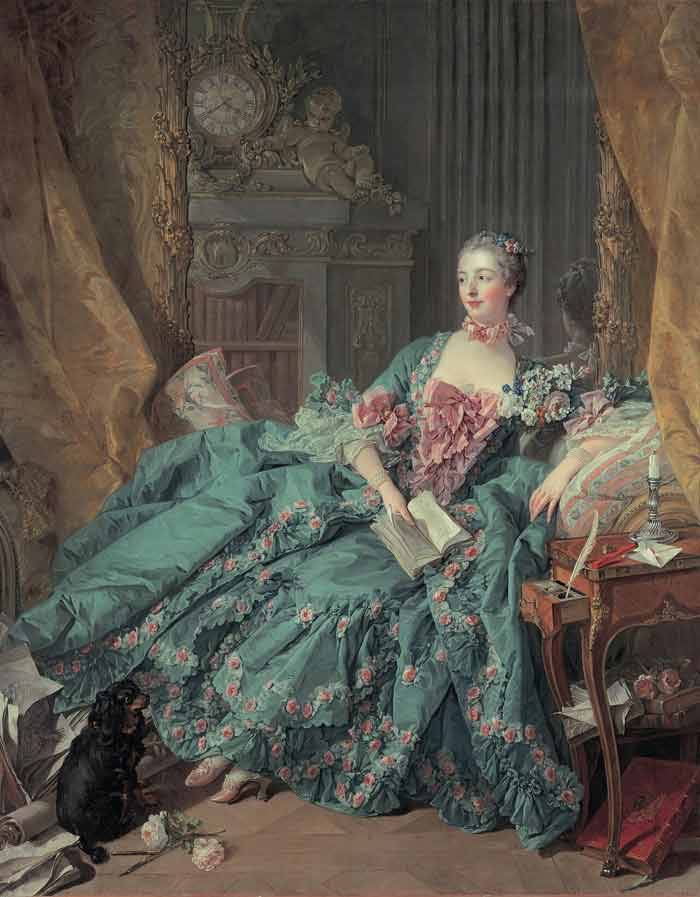
A Portrait of Madame de Pompadour by Francois Boucher (1756)
Now, let’s take a dive deep into Rococo painting. The Royal Academy of Arts in France tended to impose a classical school of thought in French art which Rococo art actively rejected. Even in its brushstrokes, Rococo art was loose and frivolous, and the French aristocracy favored that a lot. Many paintings of the Rococo were designed to fit in noble interiors for intimacy, so it became a place where the rich could indulge in luxury forever without worrying about any consequences. Paintings depicted domestic and pastoral scenes, leisure, and even allegorical myths. When it came to Greco-Roman mythology, Venus and Eros were obviously the best choices, which brings in the themes Rococo art depicted. Artists managed to seep in a little bit of eroticism in their artworks such as the famous “The Swing” and “A Game of Hot Cockles” by Jean-Honore Fragonard, but they also included themes of love and playfulness like Antoine Watteau’s “The Embarkation for Cythera”.
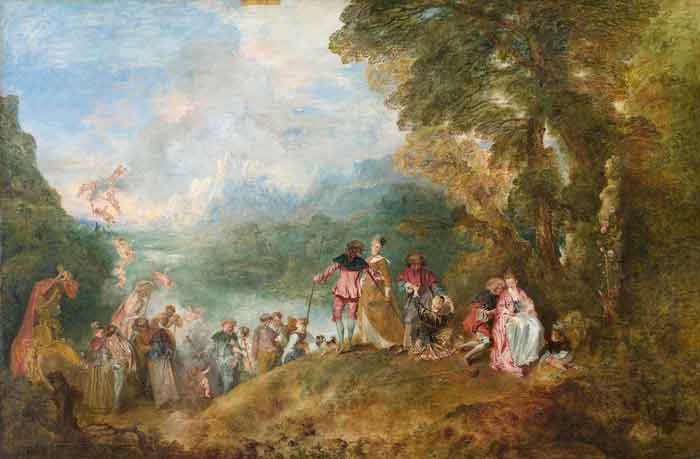
The Embarkation for Cythera by Antoine Watteau
Unfortunately, the pleasure and leisure wouldn’t last long. As the Rococo style was flourishing in France, another opposing movement flourished beside it too called “The Age of Enlightenment”. The Enlightenment was a movement that emphasized empirical evidence and scientific methods and promoted ideals of liberty, intellect, and progress. Many philosophers that aligned with the movement criticized the Rococo movement greatly by regarding it as immoral and demanded civil and righteous art that promoted logic and morals. Artists like Boucher were attacked for their art by French critics and from there the Rococo art movement dissolved as the 18th century neared to an end. The movement was then replaced with Neo-classicism with the discovery of sites like Pompeii.
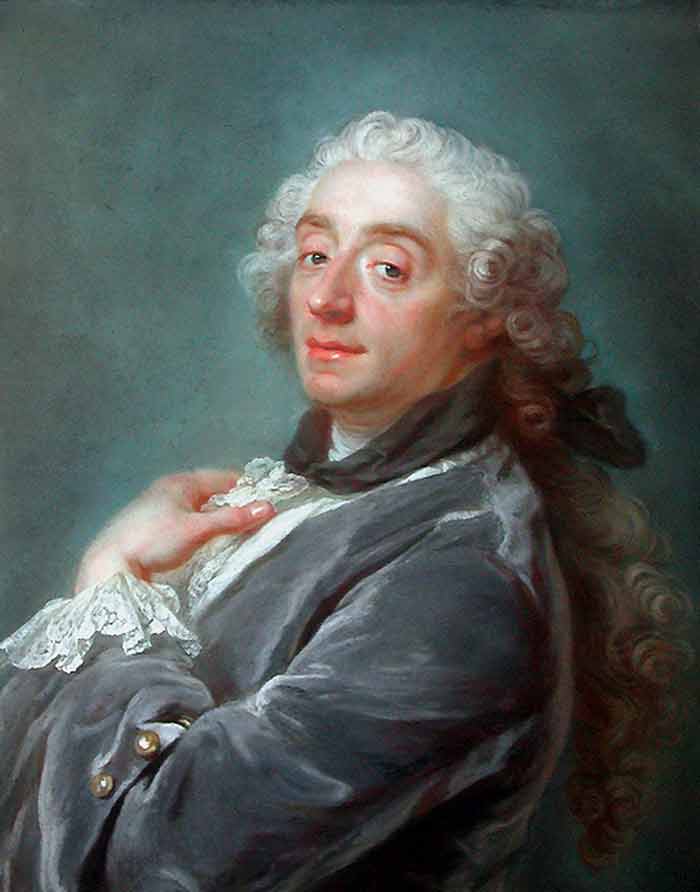
A Portrait of Francois Boucher by Gustaf Lundberg (1741)
Rococo would then simultaneously gain traction in other parts in Europe, like in Italy with Tiepolo, before eventually succumbing to neo-classicism. Even when knowing the general rundown of the history of the Rococo movement, the soft and flowy happiness of Rococo warms me to the core. It is like sipping a cup of sugary white tea in the early morning as the sun is rising, and it’s the kind of imagery we tend to associate with Rococo paintings. However, it’s also hard not to ignore the teeth-rotting consequences with the sweetness that Rococo gives us!