Article by Ayyub
If you have ever approached anywhere near art history, you have definitely come across Dutch painter Vincent van Gogh and his tragic story. Vincent van Gogh was a troubled man who dedicated his life to his artworks only to find success posthumously. However, there are artists who experience the opposite; they find success during their lifetime only for them to fade into obscurity, never to be seen ever again. John William Godward was one of these artists. Although he has amazing skill, he witnessed his own style fall out of favor, and the combination of very unfortunate factors drove Godward to the absolute edge.
John William Godward was the eldest of 5 children of John Godward and Sarah Eboral. We have no existing portrait of John William Godward, and that is mainly the family’s fault, but I digress. They were likely from an upper-middle-class to middle-class English family since the father worked in life insurance for a living. John William Godward has a natural inclination towards art, much to the absolute dismay of his parents. Godward also had a very reclusive and shy nature due to the Godward family’s highly conservative and puritanical behavior, which greatly contrasted what Godward would paint in the future.
When you look at his artwork, it is not hard to compare his artwork to those of the well-known Sir Lawrence Alma-Tadema. Some believe that Godward was Alma-Tadema’s protégé. However, until now, we have no exact documentation that shows John’s art education. There are beliefs that he studied architecture under William Hoff Wonter and attended St. John’s Wood Art School and Chaplam School of Arts with Wonter’s son. I believe that it’s not far-fetched to assume that Alma-Tadema and Godward have met each other at some point. What is known is that Godward was definitely inspired by Alma-Tadema’s work when it came to the depiction of detail.
Godward began exhibiting at the Royal Academy of Arts in 1887, where he would grow in popularity and make a living from his artworks to be able to move away from his family to live in Chelsea. From there, he began studying Greco-Roman antiques, clothing, and the like to inform his works. Godward was an insane art machine; he pumped out 15 to 20 detailed and highly rendered pieces of art every year. Eventually, he moved to Rome in 1912, where he would spend almost a decade creating his paintings. This is likely where Godward’s family began clipping him off from photos since they disliked his decision to move to Rome.
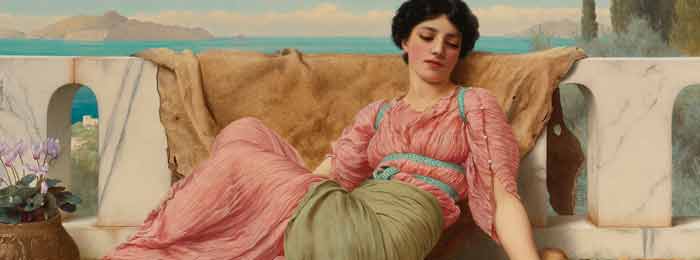
John William Godward’s main subject was women during an idealized ancient Greco-Roman setting. Outside of the very few paintings he made, he never really deviated from the “classical beauty” he painted over and over again. Many of his paintings tend to repeat the same compositions as well. Other than that, Godward has displayed excellent skill in painting and depicting textures such as tigers, marble, cloth, and soft skin. Godward took advantage of all the Greek and Roman architectural knowledge and studied them meticulously in order to produce remarkable results in his artwork.
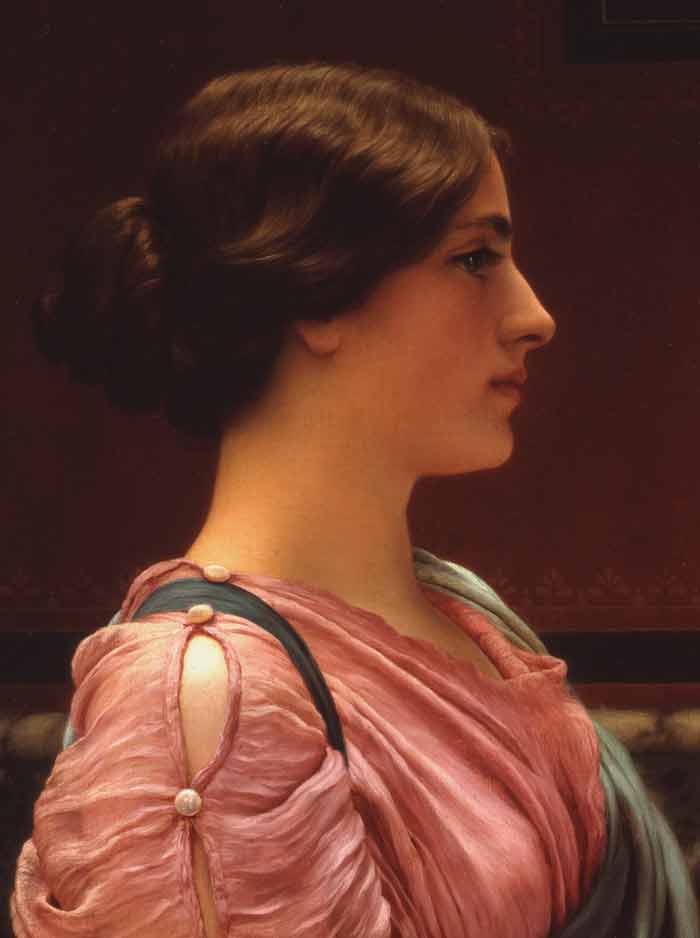
“A Classical Beauty” by John William Godward
Around this time was when modernism emerged: a movement that searched for newer means of cultural expression. Artists like Pablo Picasso and Henri Matisse were getting more recognition, and with that occurred a cultural shift. Art similar to John William Godward was then recognized as “passé.” Slowly but surely, his art was getting rejected by society, and his output greatly decreased. He has also had many physical problems and ailments he couldn’t bear. He returned to London in 1921, and since then he has had nowhere to go and nothing to live for because neither his family nor his society would accept him. As art historian Vern G. Swanson puts it in his book “J.W. Godward: The Eclipse of Classicism,” “This rejection by the world was the last straw and cue to leave the world.” In whatever way he managed to do it, on the 13th of December 1922, John William Godward committed suicide at the age of 61. Shocked, ashamed, and angry at her son, his mother destroyed all personal things and papers that reminded her of him, which explains why no photograph of him survives today.
In an effort to commemorate the artist, here are many examples of his masterful work.
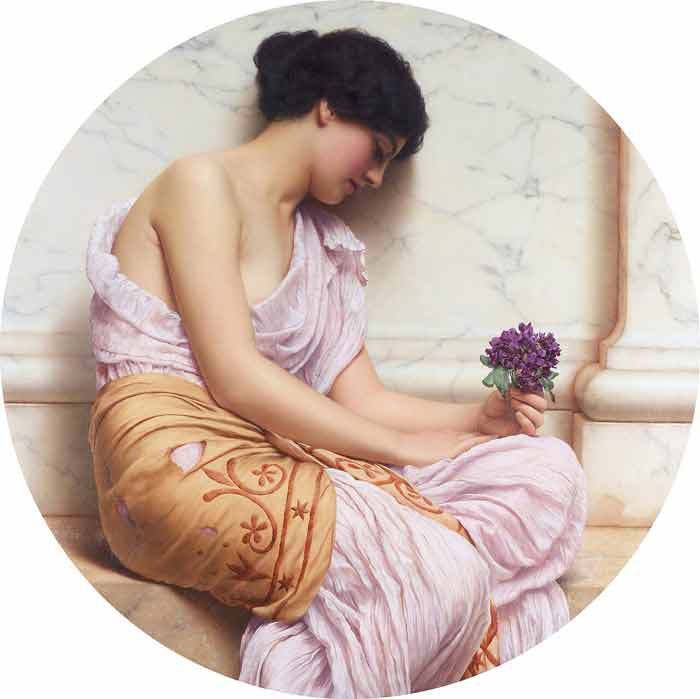
“Violets, Sweet Violets” by John William Godward
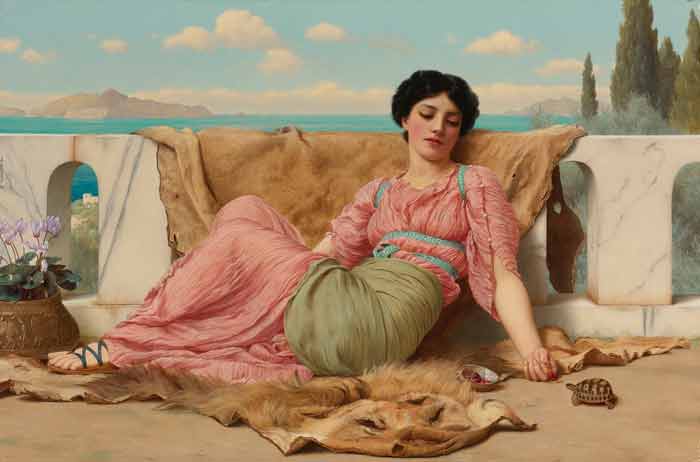
“The Quiet Pet” by John William Godward
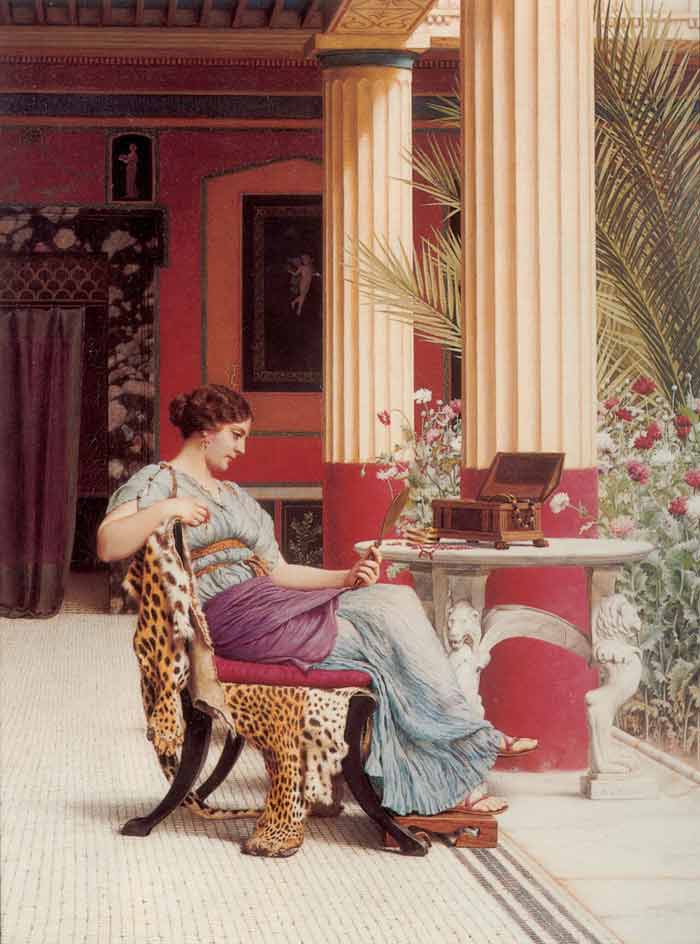
“The Jewel Casket” by John William Godward
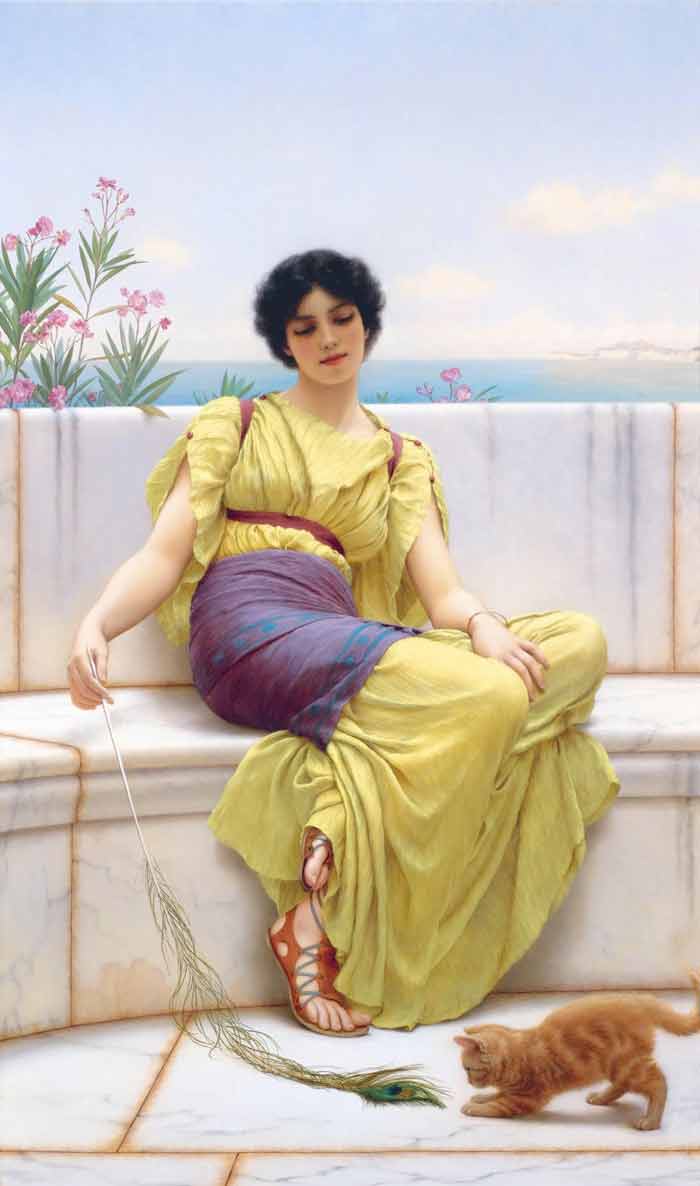
“Idleness” by John William Godward
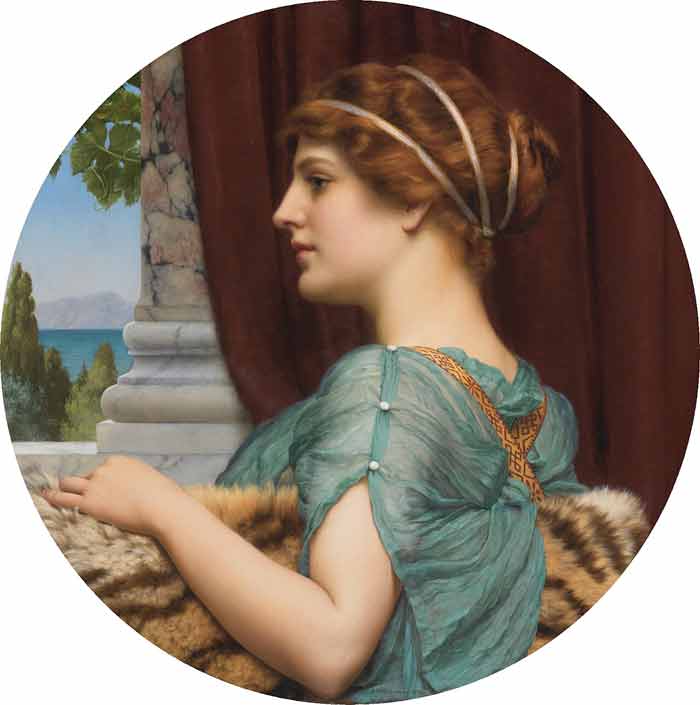
“A Pompeian Lady” by John William Godward
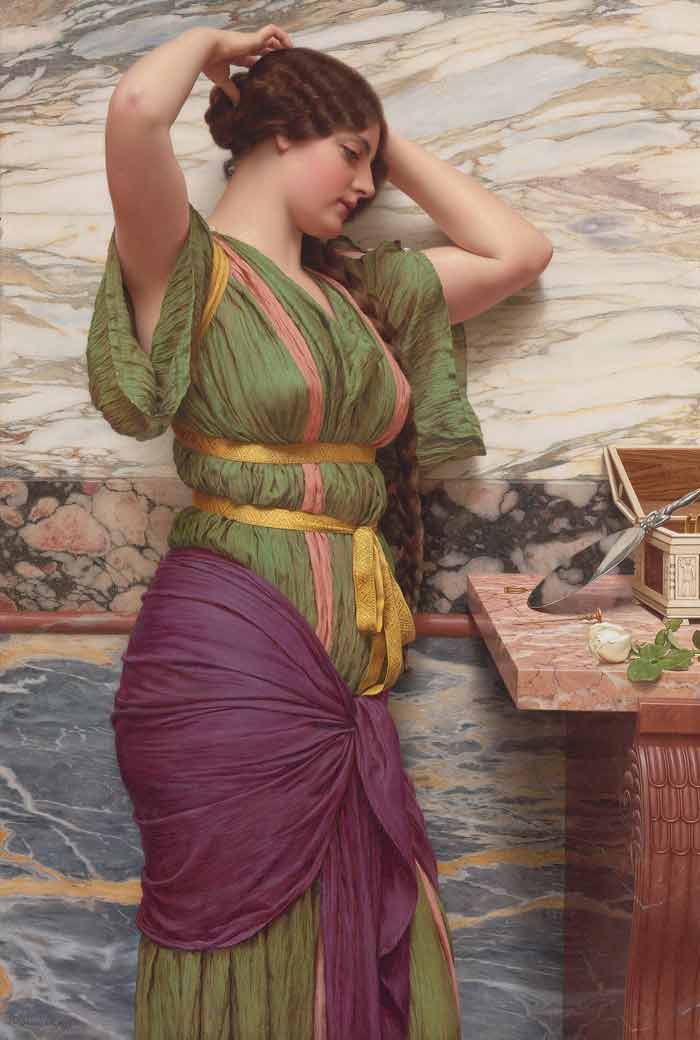
“A Fair Reflection” by John William Godward