Article by Ronnie Rayner Larter
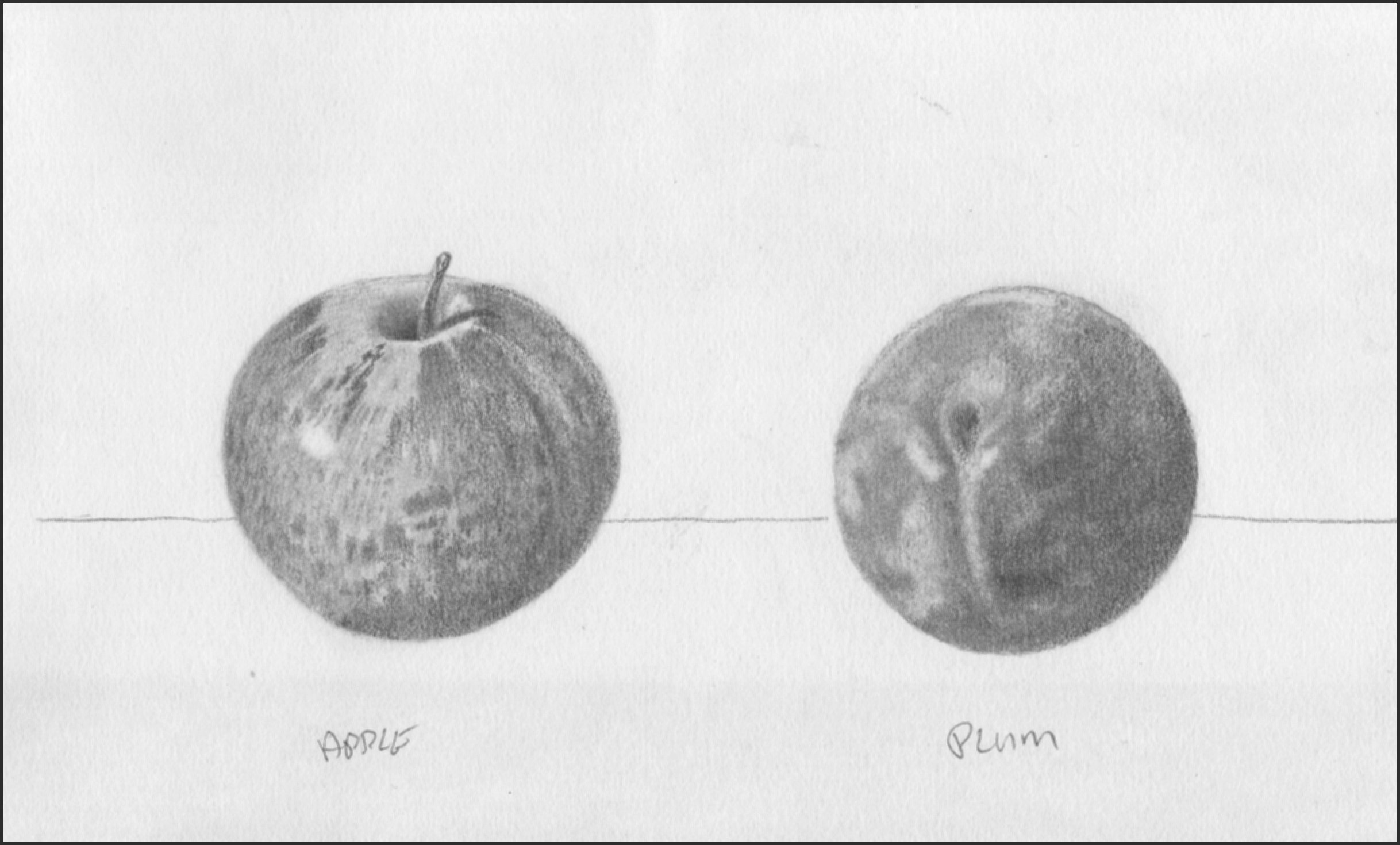
 Over the years, as an artist, I always smudged graphite to create smooth, graduated tonal blends. I used various materials for blending such as the cotton bud, piece of soft leather, piece of linen, tissue, paper stumps etc., each one creating a slightly different result. However, there is a problem when adding more blended graphite to achieve a darker tone; the drawing often looked lifeless and shiny, which spoilt the final study. I was at a loss about how to overcome the problem. I tried not to take the smudging of graphite too far; but without darks, the drawing appeared weak.
This left me with a dilemma. Do I continue smudging graphite or not? Or do I push myself to use another medium such as charcoal. Because graphite pencils have been my favourite drawing medium, I decided to continue smudging but persuaded myself to find a way to overcome the problem. I used most of the grades from 4H to 8B to obtain all the tonal values I needed, but the 4Bs to the 8Bs were the main problem; they were the pencils that created the glossy look.

Apple and Plum using the smudging technique – by Ronnie Rayner Larter
When I stumbled across the Drawing Academy where I found a free video titled ‘The 12 Most Essential Skills Every Fine Artist Must Have‘ my problem was solved. Skill No 11, which was about understanding rendering techniques said, smudging graphite was an absolute no no. It was considered to be an amateurish technique. Graphite pencils, said the academy, should only be used for hatching and cross-hatching, and only limited number of pencil grades should be used, for example HB or perhaps 2B, which surprised me.
I always associated hatching and cross-hatching with pen and ink, a technique I hadn’t used much during my life as an artist. However, I decided to take their advice on board, (and it was free advice), to try hatching with a pencil. At first, I didn’t really like the technique, but as the weeks went by, I persevered and had actually grown to enjoy the process. It became very therapeutic and satisfying and I had complete control over the depth of tone needed. The process is a slow one, but is well worth the effort. The hatching and cross-hatching technique created a wonderful, soft textural appearance that gave my drawings life and vitality instead of looking tired or dead. The use of graphite pencil using the hatching technique is in fact, more enjoyable and satisfying than using the smudging method. I am now a converted pencil hatcher. I have also learnt to use charcoal with graphite, which creates pleasing effects. However, one has to be mindful of the fact that charcoal on graphite do not mix well; so you need to reverse the process by applying graphite over charcoal.

Still-life using Hatching Technique with a 2H and HB Graphite Pencil – by Ronnie Rayner Larter
It’s thanks to the Drawing Academy, and as a non-member I might add, that I owe my new-found skill of using the graphite pencil without smudging. I now feel I am progressing towards a more masterly use of that wonderful tool.

Bargue Study: Hatching with HB Graphite Pencil – by Ronnie Rayner Larter
If you are not a member, I would strongly advise you to consider signing up as a free member, in the initial stages at least, to watch those free videos. You might find them useful and even learn something new, and for free, which can’t be a bad thing. You might even decide to purchase the full course once you see what they can offer.
Enroll in the Drawing Academy Course
Pay once - Enjoy forever!
Only $297