Article by Ayyub
How do ideas for art emerge? They can be a bright spontaneous spark or take meticulous time to form. One of the best painters of the High Renaissance, Michelangelo Buonarotti, told the world that the angels harboring art were already there; he just had to carve or paint them out. Knowing all this, I think almost all artists agree that art reflects an artist, and art therefore becomes inseparable from the artist making it. The best of artworks came from strong emotions such as joy, grief, devotion, rage, ecstasy, and so much more. The very well-known academic painter William Adolphe Bouguereau is no different. Processing the grief of his dearest, he created two devotional paintings that are his expressions of sorrow.
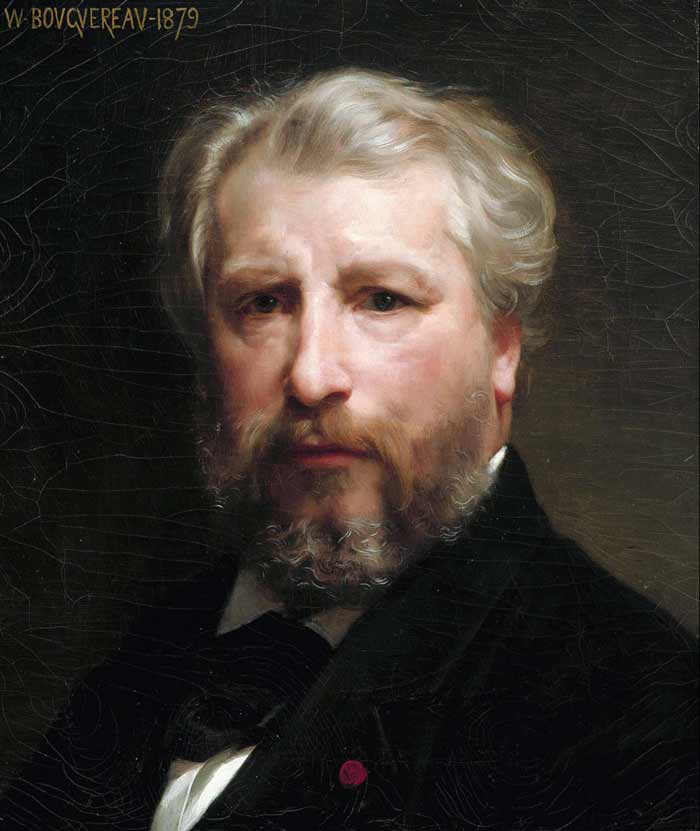
Self-Portrait of William Adolphe Bouguereau
William Adolphe Bouguereau is a French academic painter who mainly focused on drawing mythological scenes focusing on the female body or Christian scenes. One of the many themes he worked with was the Madonna and Child sometimes including John the Baptist. However, two of those paintings, “Pieta” and “The Virgin Comforter”, were acts of mourning to his oldest son Georges who passed away in June 1875.
The story of Jesus Christ’s crucifixion is all too familiar and is one of the most depicted scenes in Christian art. It is a story of sorrow and suffering towards Jesus Christ and the Virgin Mary. In “Pieta” (1876), Mary is absolutely distraught at the death of her son. She wears a black cloak of mourning as 9 angels surround her and her son all crying and pitying the death while wearing robes of distinct colors of the rainbow, perhaps calling back to the story of Noah and God’s new covenant with humanity. We know that this is not just a devotional but a mournful painting because the urn in the composition has a Latin inscription that translates to “In memory of my beloved son, Georges, on 19 July 1875”. William Adolphe Bourguereau relates his personal loss with the loss of Christ, and he finds comfort knowing that even the God he worshipped went through human suffering to teach, to preach, and call others to righteousness.
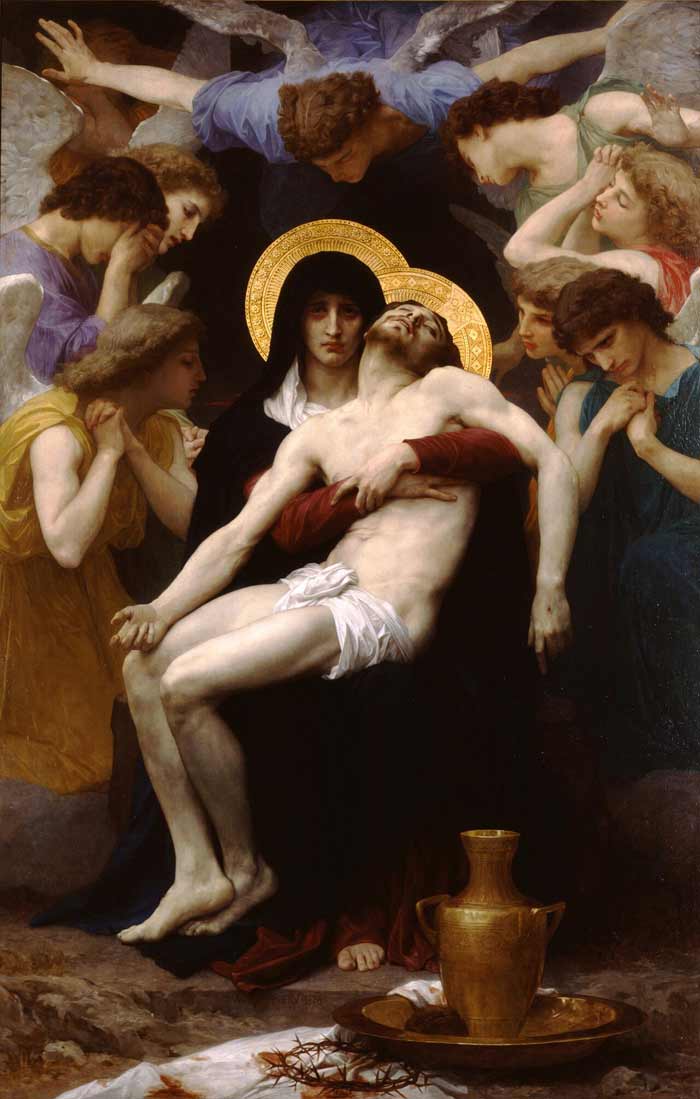
“Pieta” by William Adolphe Bouguereau
The other painting, “The Virgin Comforter”, has a much darker connotation and is arguably controversial. In this painting, a woman slumps on the Virgin’s lap and wears a black tunic or robe. The woman is mourning the loss of her dead son laying at the lowest stair. The Virgin Mary is depicted similarly to Byzantine iconography through the floral design of the background, Mary’s halo, the architecture, and her Orans gesture to signify prayer. The engraved text at the bottom reads “Mater Afflictorum” which is a title for Mary that translates to “Mother of the Afflicted”. Even with all these divine symbols attributed to Mary, why does she seem so distant? Look at her stiff hands and face. She does not have the comforting look of a mother. She is not comforting the lady, but she is praying. Does Mary not want to divinely intercept with us, or can she only do so much? Even as the Mother of God, she couldn’t prevent the death of her Son of God, Jesus Christ. Some art historians and critics even compared this depiction of the Virgin Mary to an ancient god that can be invoked but does not necessarily answer prayers. It seems like Bouguereau is lamenting about divine indifference and the allowing of suffering to continue. Whether this lamentation is directed to the Virgin Mary or to God, I’m not so sure. In Catholicism, the Virgin Mary is a figure to help intercept prayers to God. So again, is there only so much Mary can do for us?
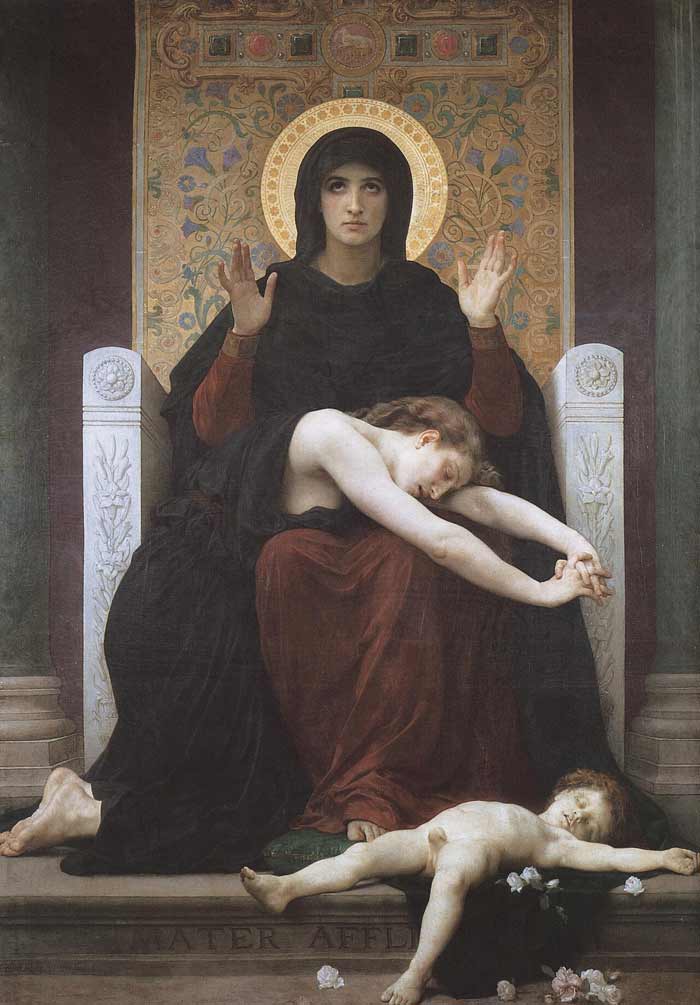
“The Virgin Comforter”
The art we make reflects parts of our life whether intentionally or not. I think that this is a huge superpower artists have no matter what craft we participate in. Art is the oldest form of human connection since we were hunter-gatherer foraging groups 200,000 years ago. Art reflects our values, what we desire, what we feel, and form the overall human experience we go through every single day. Art is the way we reflect on ourselves, reflect on others, reflect on society, and our way of thinking. Therefore, keep on making art.