Article by Ayyub
The human figure has been, and still is, a principal element in visual storytelling and fine arts. However, the naked human figure is not enough to tell a complete story. Because of that, artists have used draperies in their works. Drapery is the depiction of any clothing or textile in fine arts, and it has been used by artists for many more reasons than simply to clothe the figure or to make the artwork beautiful. Many fine artists have dedicated lots of their practice to depicting drapery since it is a showcase of their mastery and skill; however, as you will see, drapery can also carry symbolic meanings to emphasize a message or idea. With that in mind, we will take a look at a few paintings that show the messages drapery can carry.
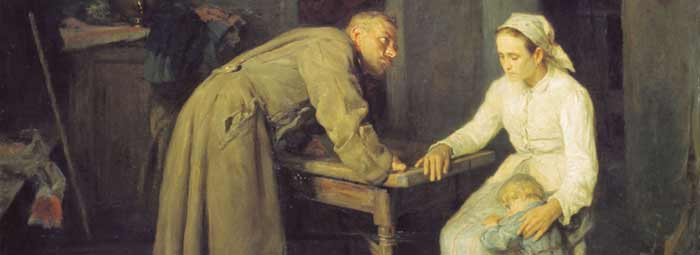
The first painting is called “Who?” by Nikolay Kasatkin. We see a husband clearly angry and frustrated at his wife with a scared young child next to the woman. The man is wearing an army uniform, which implies he has returned from military service. At first glance, it looks like the man is angry that his wife cheated on him, got pregnant, and now has an illegitimate child, but that is not the full story. Did you notice the woman’s pure white clothing? Have you wondered what the artist’s decision was to do so? The white clothing actually symbolizes the woman’s innocence. From this small detail, the narrative of the story changes from an unloyal woman to a woman who was taken advantage of. The man is mad because he wants to know who hurt his wife, hence the title of the artwork.
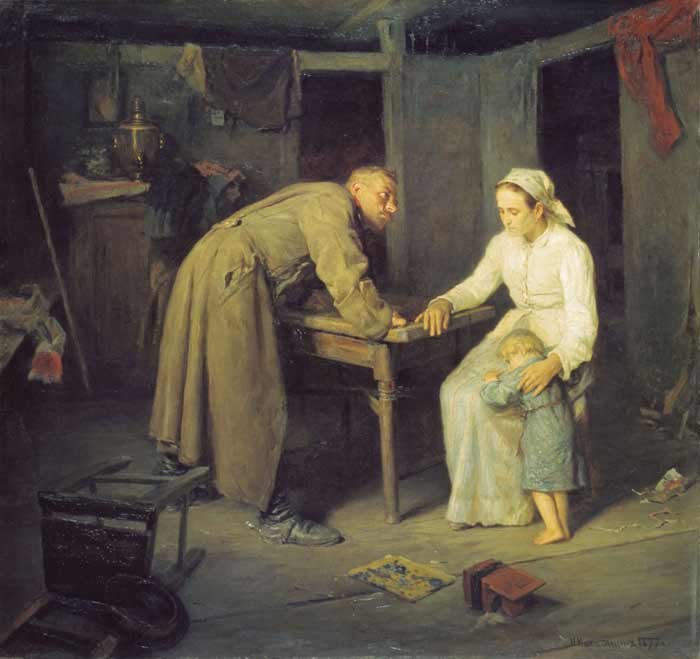
‘Who?’ by Nikolay Kasatkin
See how the painting’s story changes with the meanings drapery has to offer? Obviously, the context of the painting matters when we analyze drapery. However, when we understand the painter’s artistic or stylistic choices for the kind of drapery he or she uses, the message of the painting becomes emphasized. That is the role of drapery; it is there to reinforce the ideas the painting has to offer while being a secondary element to the artwork. Clothing on humans is so ubiquitous that we do not second-guess the dress each character has in a composition, which is why the average viewer overlooks it. But in an artist’s work, everything is intentional and plays its part.
Now, let us look at the works of Vittorio Reggianini. He is an Italian painter who mostly depicted the lives of the upper class, but he has done a few paintings of the middle or low class as well. In his works on high society, we see people in lavish living spaces doing leisure activities such as playing piano, reading love letters, and the like. That is fun and all, but what about the clothes they are wearing? We see young women and men dressed in silk dresses and suits and accompanied with fancy shoes and golden bracelets. That is a subtle indication of their wealth other than the ornate furniture, wallpaper, and rugs. This is another case of drapery playing its secondary role; it blends in with the environment.
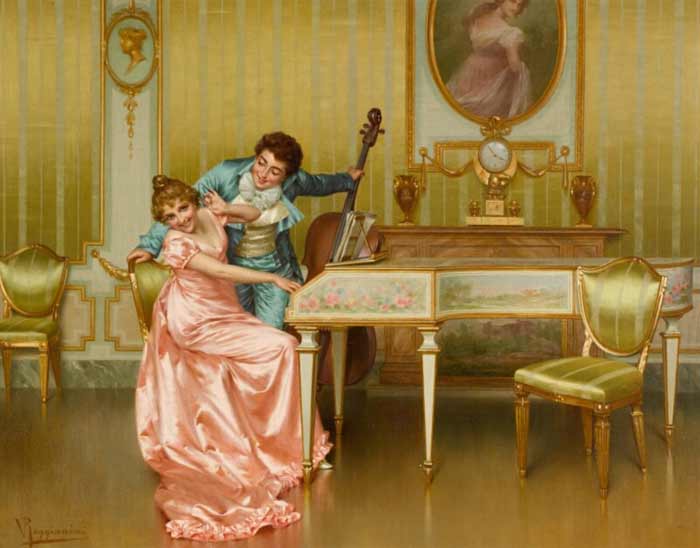
‘The Music Lesson’ by Vittorio Reggianini
On the contrary, in Reggianini’s painting “An Unwelcome Guest,” we take a glimpse of the life of the lower class. An old woman shoos a chicken that entered the house and is eating their food while the child at the bottom giggles at the sight of it all. We no longer see the extravagance of the upper class the painter would normally depict. Instead, we see old and possibly ragged clothing on the old lady; her apron looks burned, and her clothes were made from linen or wool, unlike silk. The high class has always found a way to distinguish itself from the lower classes, from culinary habits to purchased products to even the trendy clothing, and that is a phenomenon still present today. Such use of drapery can apply to a wide variety of genres in painting, such as historical painting, portraiture, social/political commentary, and more.
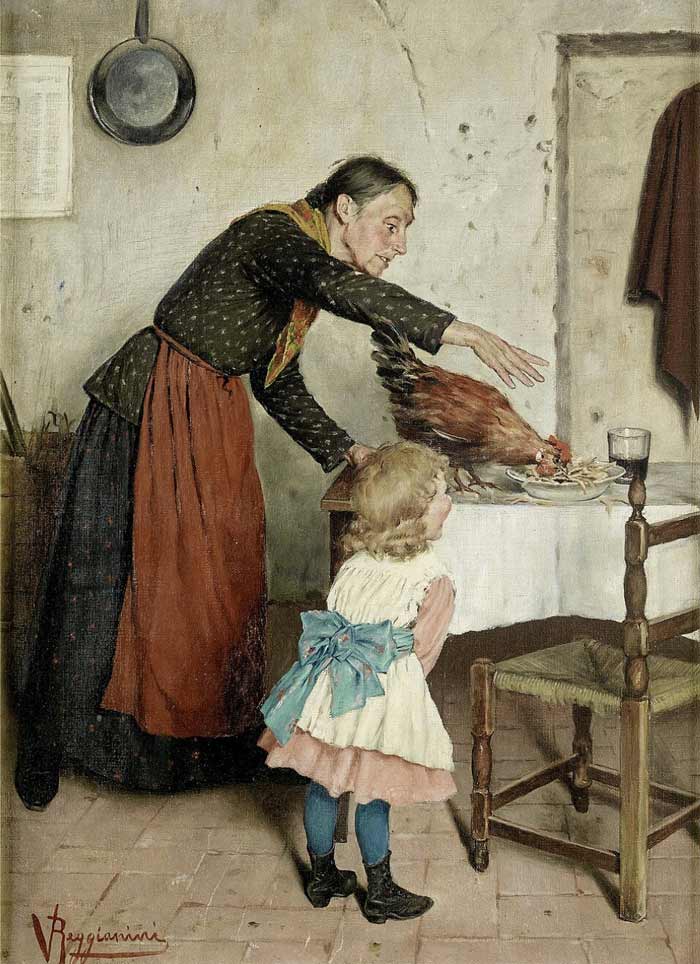
‘An Unwelcome Guest’ by Vittorio Reggianini
Clothing is so common that we usually overlook it, but drapery is more than just paint on canvas. Drapery can help indicate social or divine status, change narratives, or do whatever the artist assigns because drapery, like any object, can carry its own meaning. It is interesting to analyze the seemingly least crucial details of an artwork and be shocked every single time by the value it has. I ask you, the reader, to go look at any artwork from any period of time and see not just the drapery, but also the nooks and crannies of every piece of art. Chances are you’ll find out that not everything in the artwork was placed deliberately, and I would argue that this concept is quite important if we would like to get the full picture of any piece.