
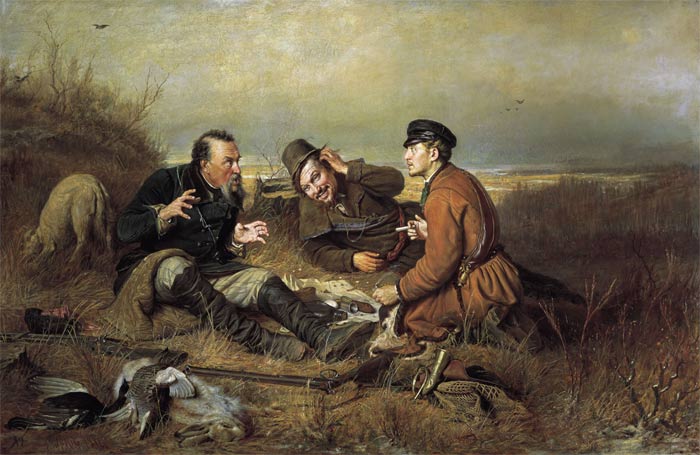
Article by Dennis Jarsdel and Vladimir London
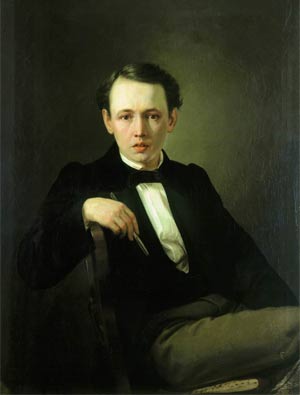
Perov received his first formal art lesson at the age of 12 at the Alexander Stupin Art School in Arzamas. Stupin was a painter of the classicism genre, whose school was the first of its type in provincial Russia. Alexander Stupin also taught many other famous artist such as Vasily Rayev and Evgraf Krendovsky. Later on in the year of 1853 he moved to Moscow and entered the Moscow School of Painting, Sculpture and Architecture.
In different years the Imperial Academy of Arts marked him with a number of awards. In 1861 his painting Sermon in a Village gained Perov the major gold medal and the opportunity to go for a journey abroad at public expense: in 1862 he went to Europe and visited Paris and a number of cities in Germany.
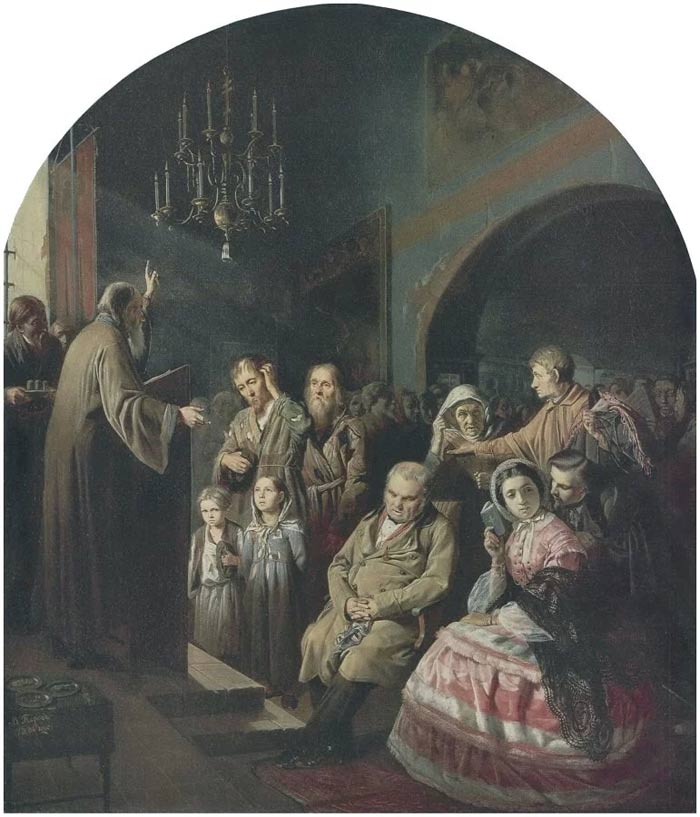
Sermon in a Village by Vasily Perov, 1861
In the year 1865, at the age of 31, Vasily Perov returns back to Moscow from Europe for another 6 years. During these years, the artist creates his most well know masterpieces such as The Queue at The Fountain, The Last Journey, Troika, The Lent Monday, Arrival of a New Governess in a Merchant House and The Drawing Teacher among others.
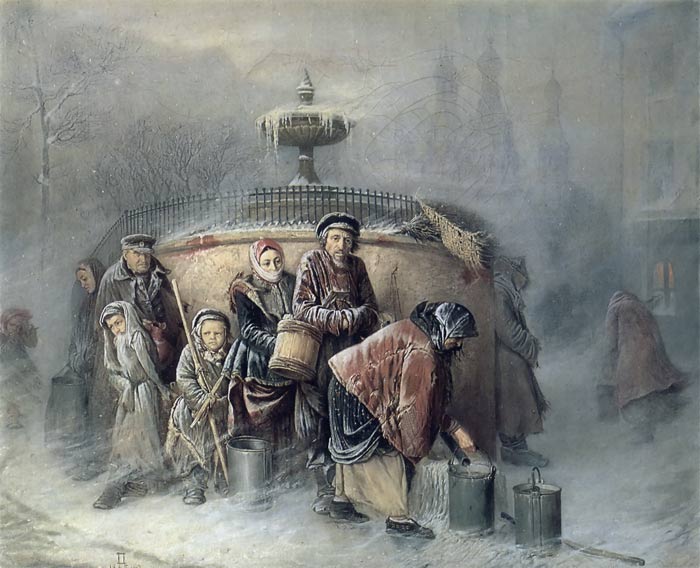
The Queue at The Fountain by Vasily Perov, 1865
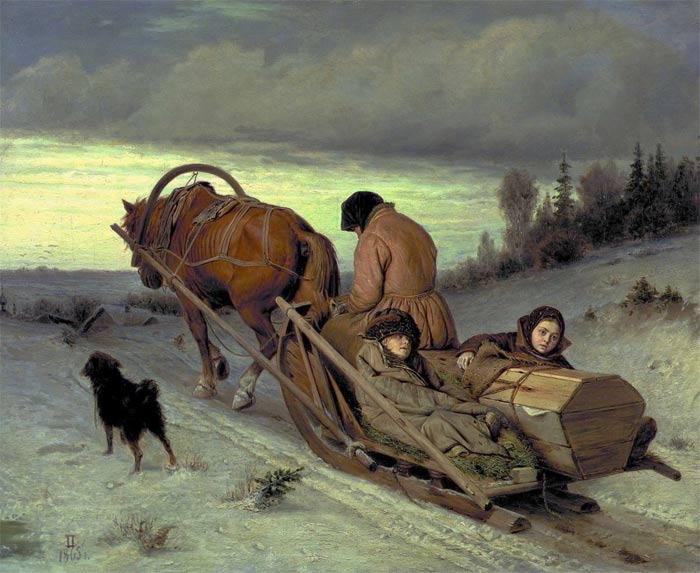
The Last Journey Vasily Perov, 1865
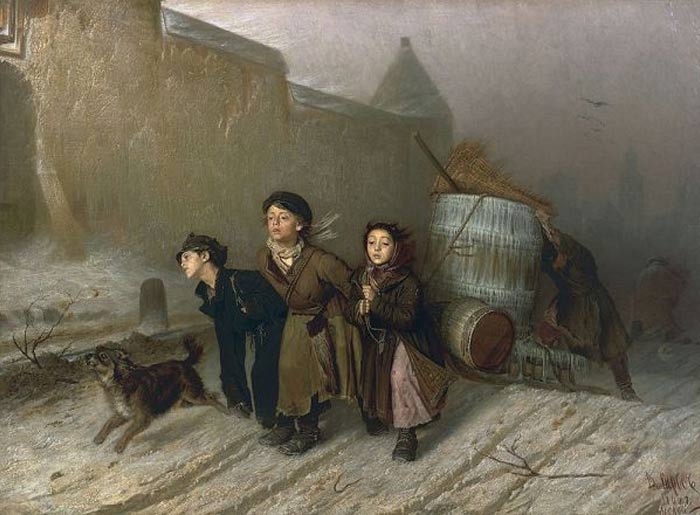
Troika by Vasily Perov, 1866
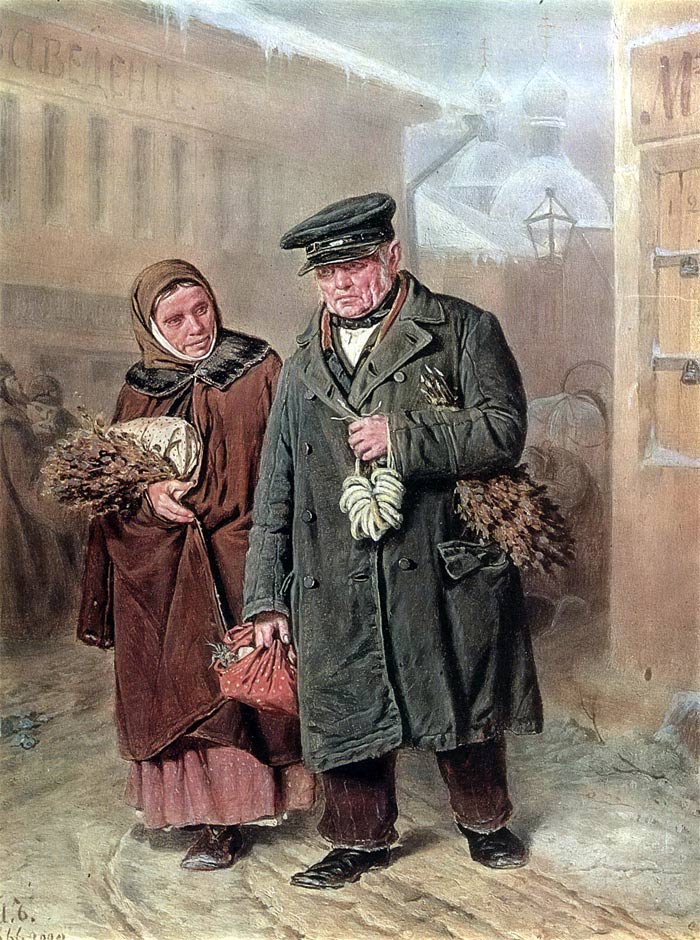
The Lent Monday by Vasily Perov, 1866
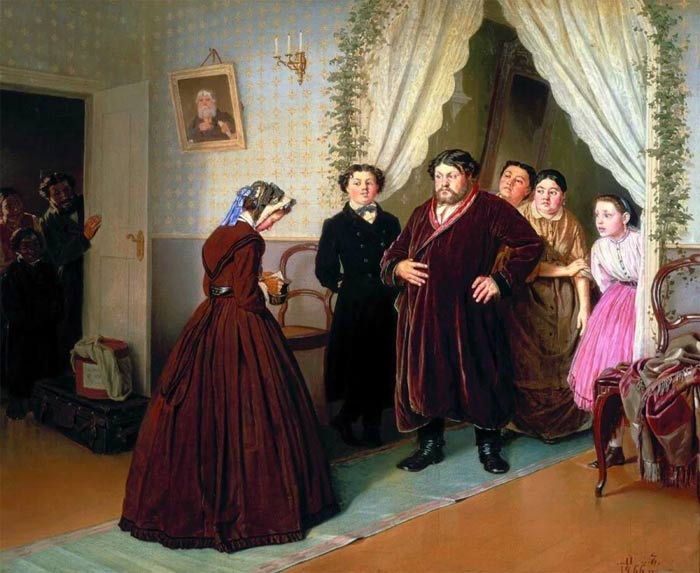
Arrival of a New Governess in a Merchant House by Vasily Perov, 1866
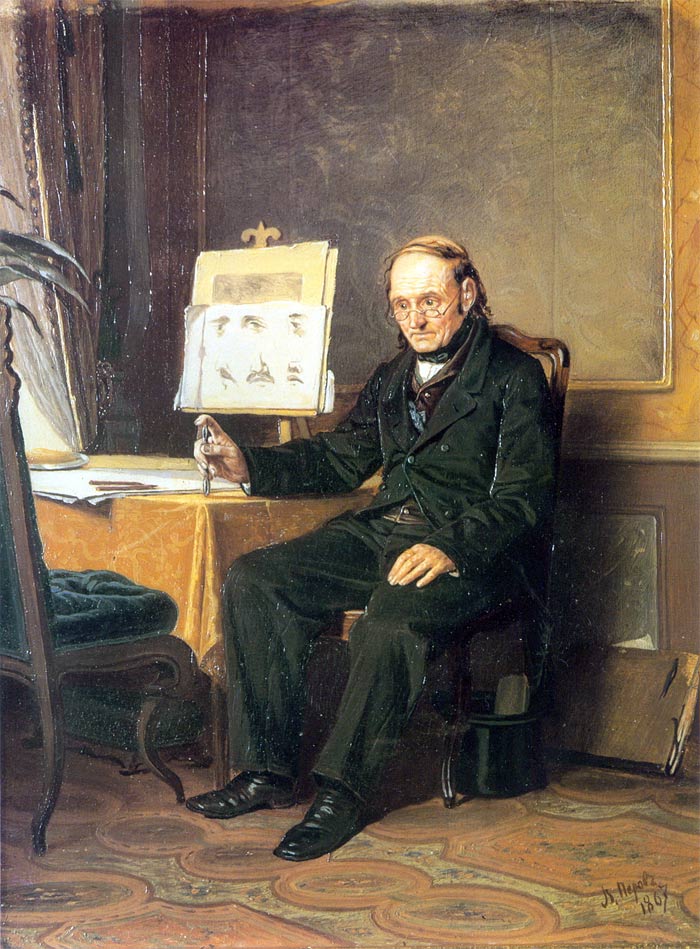
The Drawing Teacher by Vasily Perov, 1867
As a realist artist, Perov achieved his fame and success at the end of the 1860’s. One of his well-known paintings is The Drowned Woman, created in 1867. This highly emotive work portrays a policeman, who dragged the body from the river and is sitting, smoking a pipe with sad gaze over the dead body. In this masterpiece, the artist raises an eternal question about life and death.
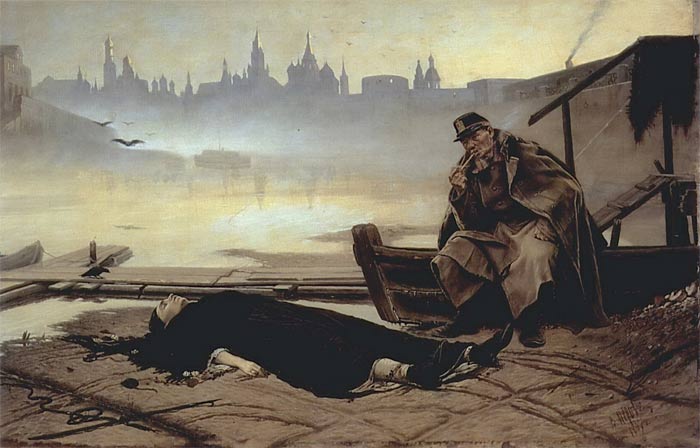
The Drowned Woman by Vasily Perov, 1867
Perov painted his artworks in oil mostly on canvas and sometimes on wooden boards. Such unfinished paintings as The portrait of Helen Shains, The Institute student visiting her blind father and The Court of Pugachev give us an opportunity to see Perov’s painting process from an imprimatura and under-painting to finished layers.
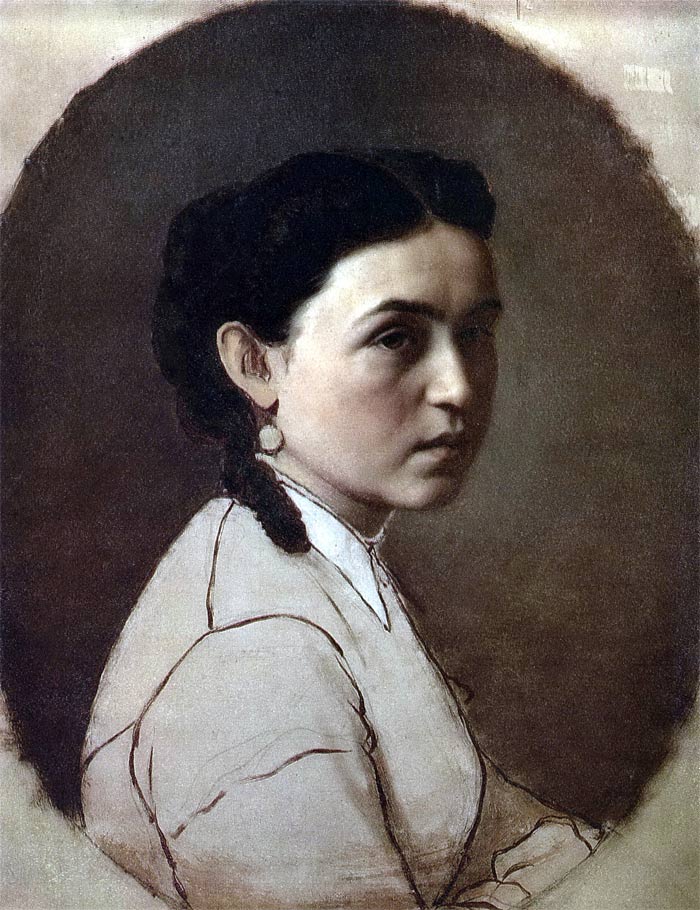
The portrait of Helen Shains by Vasily Perov, c. 1868
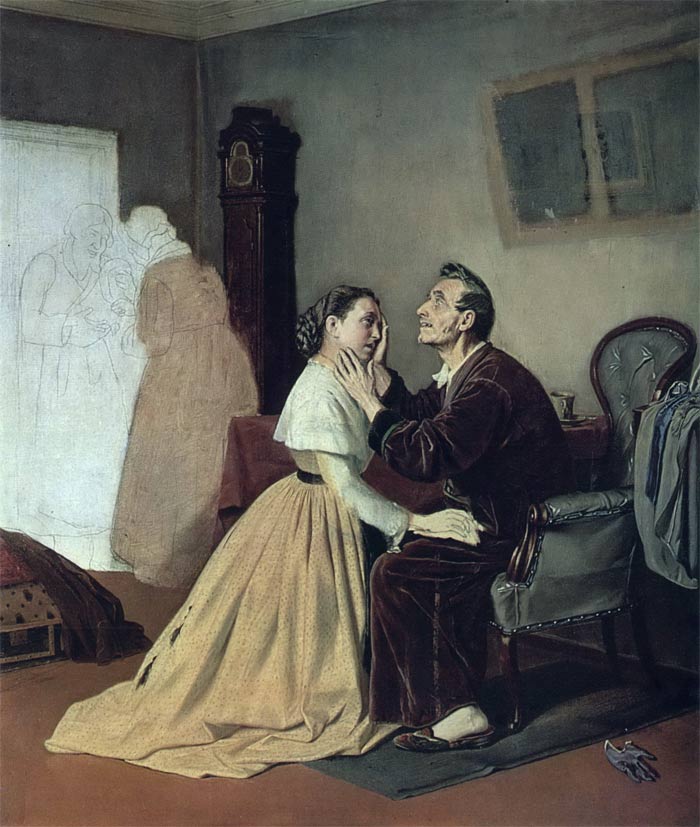
The Institute student visiting her blind father by Vasily Perov, c. 1870
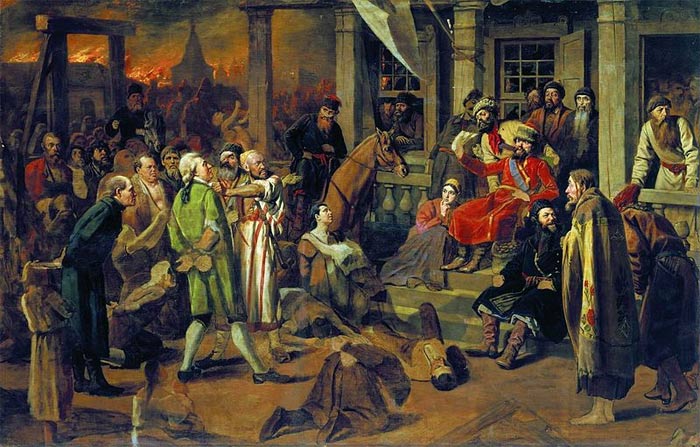
The Court of Pugachev by Vasily Perov, 1875
As a genre painter, Vaily Perov also portrayed scenes of human life filled with humor and love. Such artworks include The scene at the railway, The Birder, Hunters at Rest, The Fisherman, The pigeon lover and The Botanist.
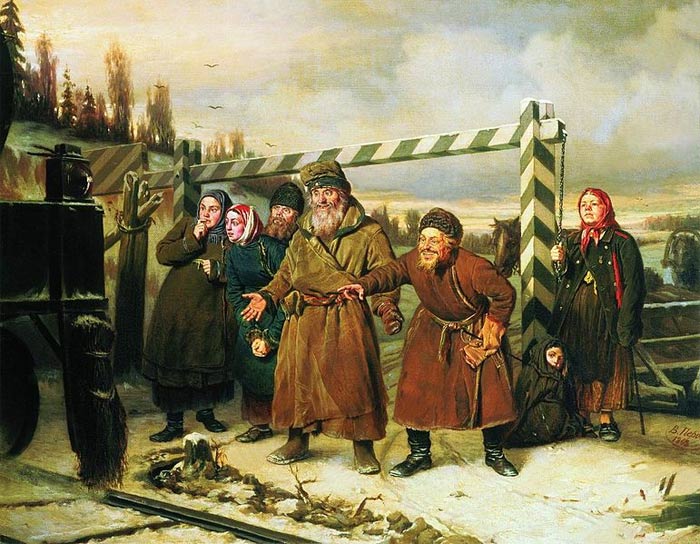
The scene at the railway by Vasily Perov, 1868
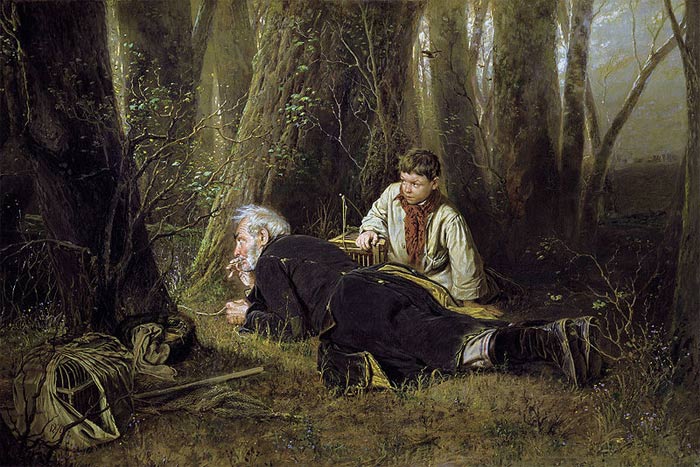
The Birder by Vasily Perov, 1870
Hunters at Rest by Vasily Perov, 1871
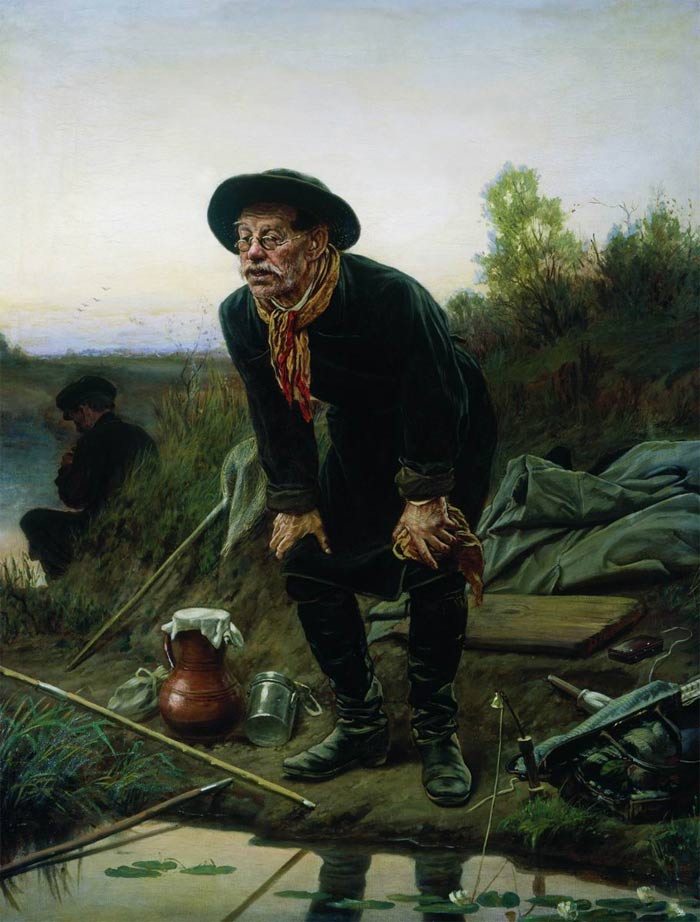
The Fisherman by Vasily Perov, 1871
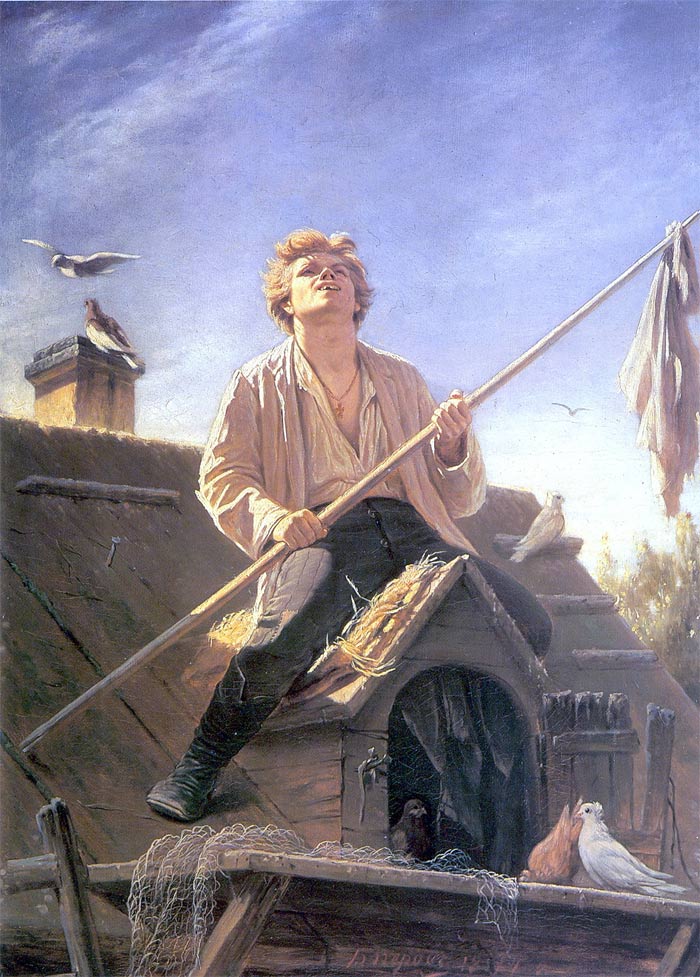
The pigeon lover by Vasily Perov, 1874
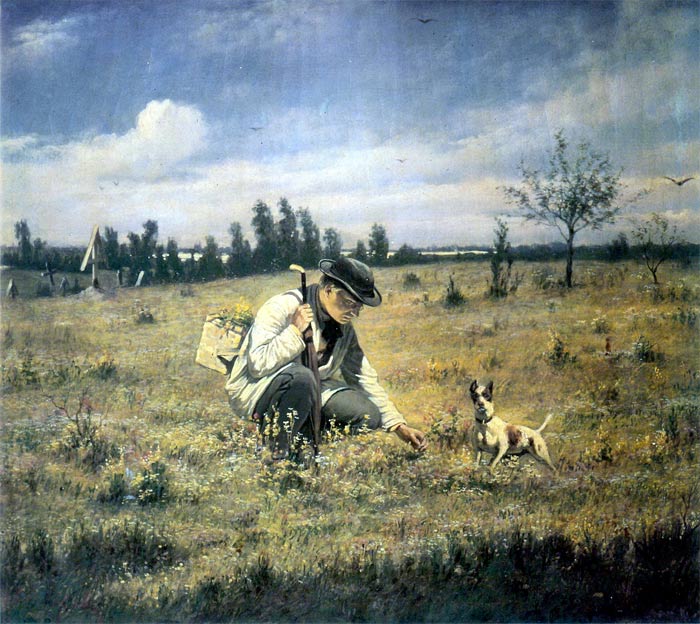
The Botanist by Vasily Perov, 1874
From beginning of the 1870’s, Perov makes a series of portraits including The portrait of A. G. Rubinstein, The portrait of Ostrovskiy, The portrait of the writer F. M. Dostojevskiy, The portrait of the artist A. K. Savrasov and many others.
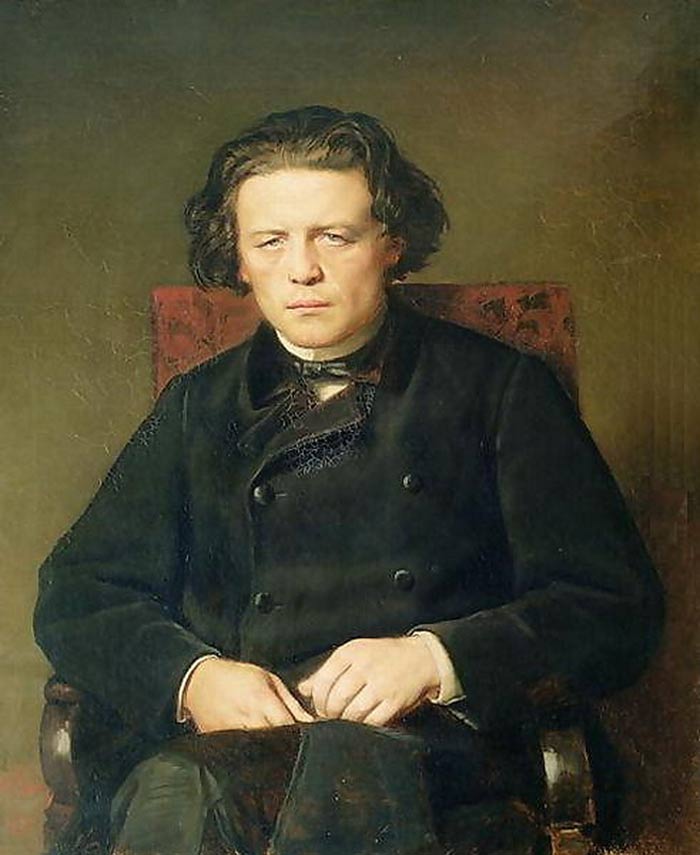
The portrait of A. G. Rubinstein by Vasily Perov, 1870
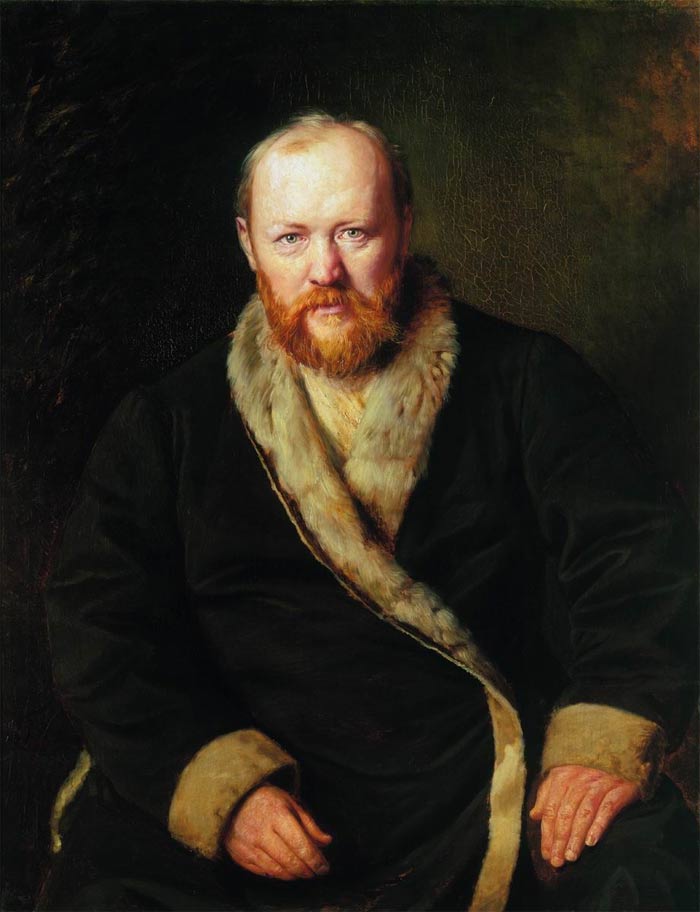
The portrait of Ostrovskiy by Vasily Perov, 1871
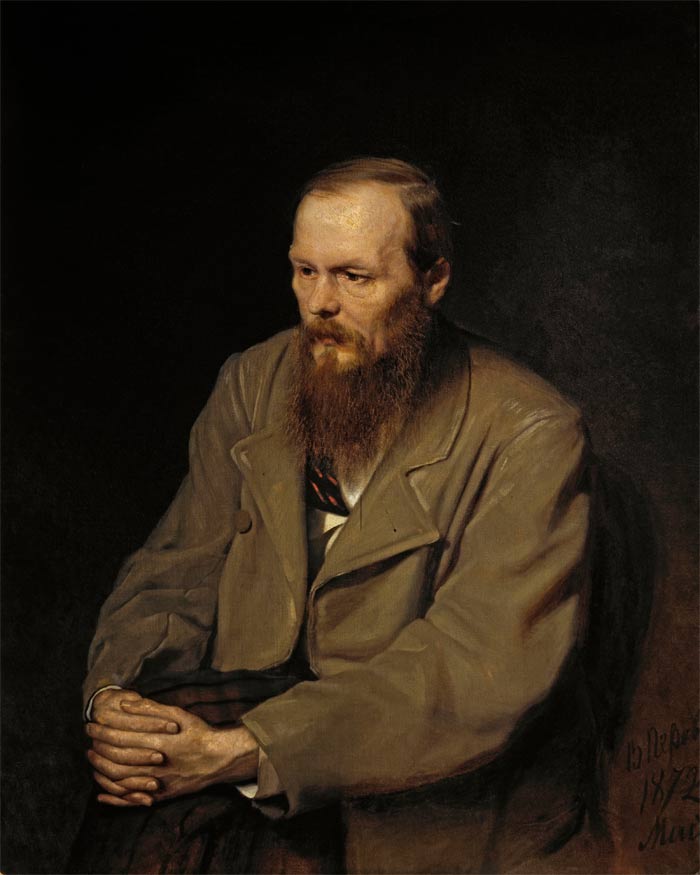
The portrait of the writer F. M. Dostojevskiy by Vasily Perov, 1872
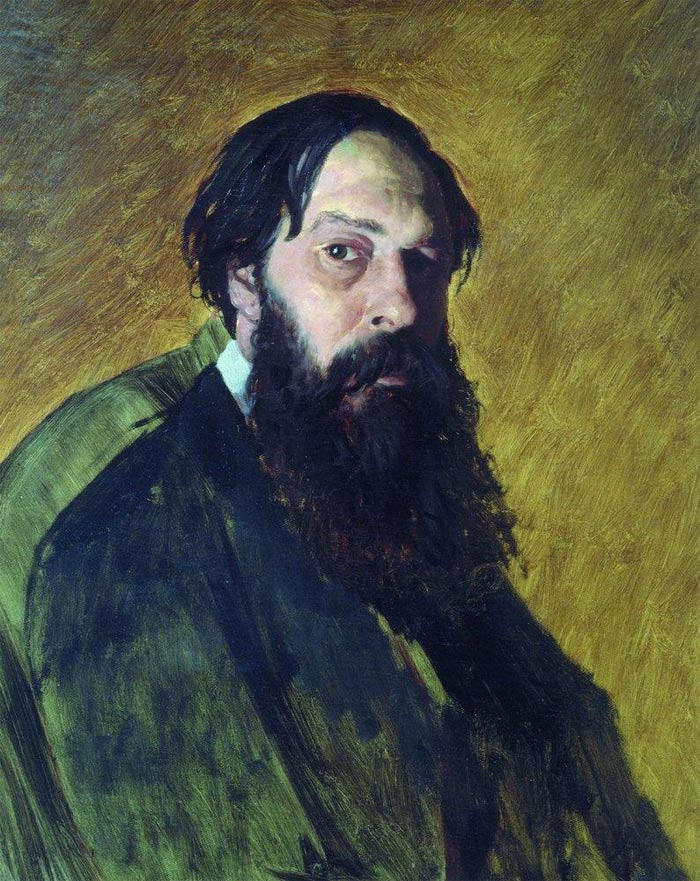
The portrait of the artist A. K. Savrasov by Vasily Perov, 1877
From 1871 to 1882, Perov was teaching art in the Moscow Art School of Paining, Sculpture and Architecture. Among his art students were such artists as V. Nesterov, A. Riabushkin, A. Kasatkin, A. Korovin and others.
One of the most prominent Russian realist artists of the 19th century, Vasily Perov died in 1882, leaving the legacy of more than 100 paintings portraying the souls and character of his contemporaries.
Thank you for this wonderful article on Vasily Perov. His oil paintings are simply stunning. In June/July this year I visited the National Gallery in London where an exhibition of Russian Artists was on display. Seeing the paintings in real life was a captivating moment for me.
I would love to see similar articles on other Russian artists on your web site. Ivon Kromskoy comes to mind.
Kindest regards and Thank You.
Christopher Heaphy.